
Les actualités

17mai
Aménagement & Gestion du printemps 2021

20avr
Une nouvelle convention pour le PUP

19avr
Etat des lieux avec Le Lycée des calanques et SAFI

01avr
Citation du PUP dans un ouvrage

Voir toutes les actus


Présentation


Crédit : L. Seguinel
Le PUP


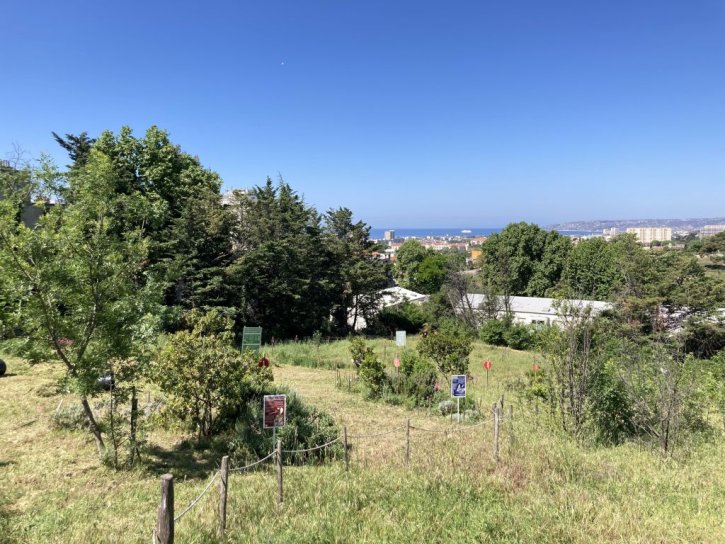
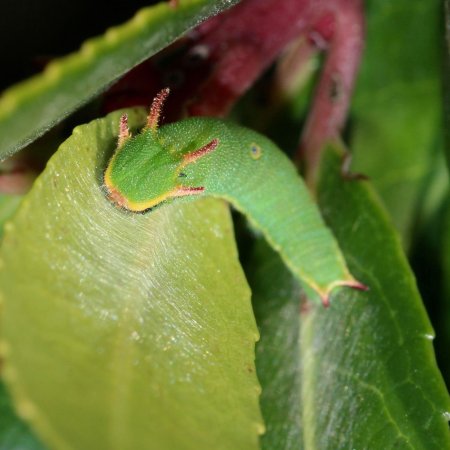
Le Parc Urbain des Papillons (PUP) est un site expérimental unique dédié à la biodiversité urbaine, situé dans le 14ᵉ arrondissement de Marseille sur le domaine de la Tour des Pins. Aménagé en 2012 sur une ancienne friche mise à disposition par la Ville de Marseille, il a été conçu pour favoriser les papillons grâce à des plantations adaptées : plantes nectarifères, sources de nourriture pour les papillons, et plantes hôtes, indispensables au développement des chenilles.
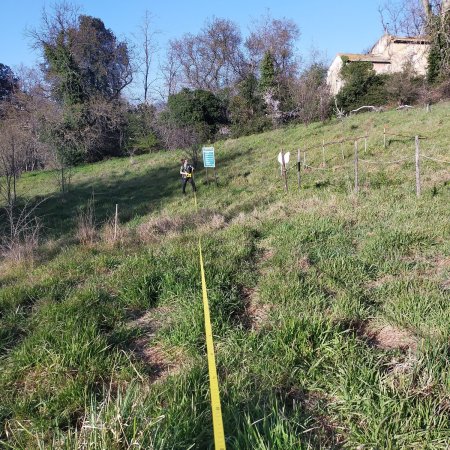
Chaque année, des suivis scientifiques y sont menés afin d’observer l’évolution des communautés de papillons de jour et de mieux comprendre les dynamiques de la biodiversité en milieu urbain.
Porté par le Laboratoire Population Environnement Développement (LPED), le PUP est aussi un lieu de sensibilisation à visée pédagogique. Il accueille scolaires, étudiants et grand public pour découvrir les enjeux de la biodiversité urbaine.
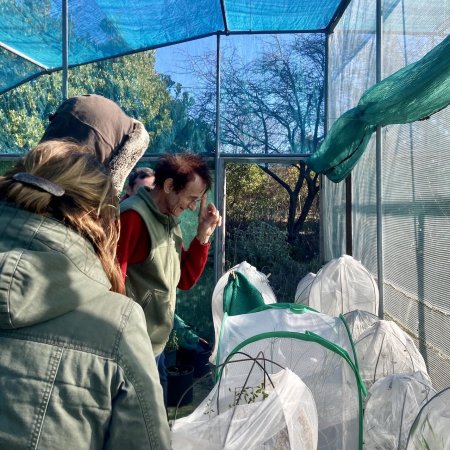
Enfin, le PUP constitue aussi un espace de formation pour les gestionnaires et futurs professionnels de l’environnement, en les initiant à des pratiques de gestion raisonnée des espaces verts. Découvrir le PUP


Partenaires et financeurs


Papillons de Marseille ...
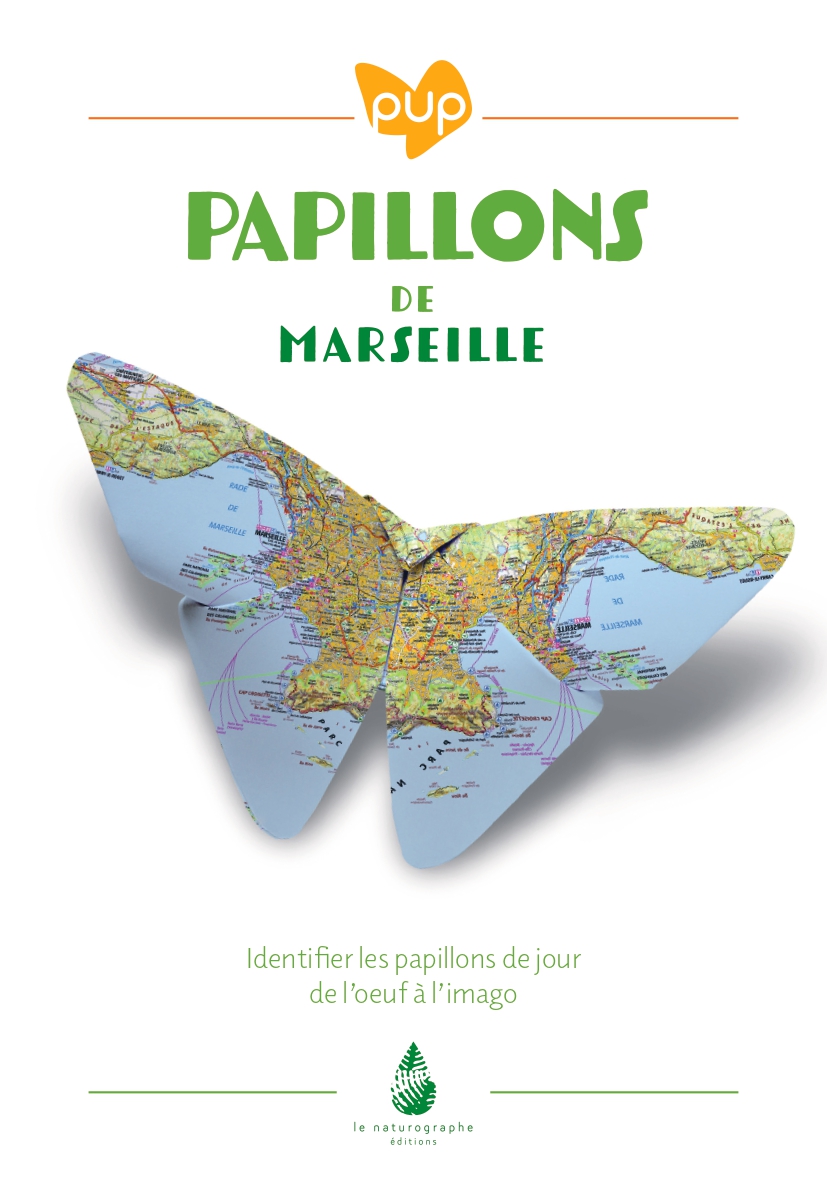

Les papillons de Marseille


Le livre « Papillons de Marseille » constitue un outil de détermination des papillons présents dans la ville. Il permet l'identification de 71 espèces observées lors de travaux de recherche menés dans des parcs et des friches urbaines. Chaque fiche est illustrée de photographies des œufs, chenilles, chrysalides et imago, offrant ainsi une vision de l’ensemble du cycle de vie des espèces. Cet ouvrage a été conçu à destination des étudiants, institutions, professionnels, bénévoles associatifs et de toute personne curieuse de la biodiversité urbaine. Découvrir le livre


On parle de nous ...


Made in Marseille reportage Olivia Chaber 2024


Silence ça pousse 2014


Présentation du Parc Urbain des Papillons


Ressources HAL

04.06.2026 [hal-05644303] Writing back to the congai trope? Postcolonial sexual encounters in Le Venin du Papillon and L’Imprudence source : papillon

In French Indochina ... the colonized concubine ‘formed the dominant domestic arrangement in colonial cultures through the early 20th century’ (Stoler, 1989: 637). Assuming the double role of mistress and servant, congai is the French colonial version of the Vietnamese word ‘con gai’ which simply means ‘young woman, female child’. A product of the colonial condition, this invented ‘type’ came to represent ‘une race de femmes annamites, produit de la colonisation’ (Nguyen, 1992: 69)1” Since Ann Laura Stoler’s seminal work Carnal Knowledge and Imperial Power studied how the colonial order enforces a specific regime of intimacy, sexual encounters in the (post)colony have been a keen object of study and interpretation. In this paper we look into how two writers of the French colonial continuum, Loo Hui Phang and Anna Moï, stage sexual encounters involving white male figures and Asian heroines or narrators in two novels, respectively, L’imprudence (2019) and Le venin du papillon (2017). The first one set in between today’s France and Laos and the second one in newly independent Việt Nam. We delve into a close reading of two echoing voices: the one of Xûan, a Vietnamese teenager courted by a French diplomat twice her age and the one of the narrator of L’Imprudence, a Laos-born 23-year-old French-Vietnamese, seeking the thrill – or respite from family duties – of brief sexual encounters. We examine these texts building upon Wanrug Suwanwattana’s research “Decadent Colonial Saigon in Fin-de-siècle French Literature”, which sheds light on the figure of the congai in French literature at the turn of the 19th century. How is the postcolonial sexual encounter used to write back to the congai trope? How is the risk of re-orientalising adressed or ignored?

31.05.2026 [hal-05638684] L’Empereur violet, une passion anglaise source : papillon

Il s’agit d’une recherche sur la fascination particulière qu’exerce chez les naturalistes anglais, depuis le XIXe siècle, un papillon (Apatura iris). À travers des récits historiques et des anecdotes contemporaines, elle met en exergue l’évolution culturelle de cette passion et son impact sur la conservation de cette espèce.

26.05.2026 [tel-05633172] Evaluation quantitative des risques industriels avec incertitudes par la méthode du noeud papillon. Application sur un cas d'étude concret source : papillon

L'analyse quantitative des risques est devenue un outil d’aide à la prise de décisions pour toutes les activités industrielles exposées à des risques d'accidents majeurs. En France, depuis l'accident d'AZF, la réglementation a évolué et exige désormais des études de sécurité quantitatives pour évaluer et réduire les risques technologiques. Cette analyse a encore une forte marge d’amélioration, dont celle d’intégrer les incertitudes inhérentes aux probabilités d’occurrence d’événements et scénarios susceptibles de se produire. L’évaluation des risques industriels par la méthode du nœud papillon n’échappe pas à ce besoin d'évolution. A travers le traitement d’un cas d'étude concret proposé par Technip Energies, cette étude conduit une analyse pratique de la résolution du nœud papillon qui intègre les incertitudes aléatoires et épistémiques liées aux évènements et barrières de sécurité présents dans le nœud papillon.

18.05.2026 [hal-05625063] Transcriptomics of feeding and reproductive stages of the South American cactus moth source : papillon

The cactus moth, Cactoblastis cactorum, native to southern South America, has extended its range throughout Florida, north to coastal South Carolina and west to Texas in the United States and the Caribbean region, posing a threat to native Opuntia and also affecting the production of prickly pear-associated industries in both its native and non-native ranges. Past efforts to control the cactus moth have not been effective. However, promising biological control agents are currently under evaluation. Moreover, as genomic and transcriptomic data become available, emerging techniques, such as gene editing, offer promising avenues for developing alternative control strategies. In this study, we present novel transcriptomic data of adult male and female moths and larvae using RNA-Seq to gain new insights into the genetic repertoire of this cactus pest along its life cycle. The final assembly revealed 14,202 genes, of which 2,199 and 2,008 transcripts were differentially expressed between males and females, and between larvae and adults, respectively. Overall, functional analyses pointed to an enrichment of serine-type peptidase inhibitors, odorant-binding proteins, and glycoside hydrolases between life cycle stages (larvae vs. adults) and sex-specific biological functions. Our study provides the first report of differential gene expression across developmental stages, generating new and valuable genetic resources to guide future molecular and physiological research as well as pest management strategies in the cactus moth.

04.05.2026 [hal-03319805] A plant volatile alters the perception of sex pheromone blend ratios in a moth source : lépidoptère

Mate finding in most moths is based on male perception of a female-emitted pheromone whose species specificity resides in component chemistry and proportions. Components are individually detected by specialized olfactory receptor neurons (ORNs) projecting into the macroglomerular complex (MGC) of the male brain. We asked how robust ratio recognition is when challenged by a plant volatile background. To test this, we investigated the perception of the pheromone blend in Agrotis ipsilon, a moth species whose females produce a blend of Z7-dodecenyl acetate (Z7-12:Ac), Z9-tetradecenyl acetate (Z9-14:Ac), and Z11-hexadecenyl acetate in a 4:1:4 ratio optimally attractive for males. First, we recorded the responses of specialist ORNs for Z7 and Z9 and showed that heptanal, a flower volatile, activated Z7 but not Z9 neurons. Then, we recorded intracellularly the responses of MGC neurons to various ratios and showed that heptanal altered ratio responses of pheromone-sensitive neurons. Finally, we analyzed the behavior of males in a wind tunnel and showed that their innate preference for the 4:1:4 blend was shifted in the presence of heptanal. Pheromone ratio recognition may thus be altered by background odorants. Therefore, the olfactory environment might be a selective force for the evolution of pheromone communication systems.

07.04.2026 [hal-05583524] First record of Stempfferia insulana (Aurivillius, 1923) from Gabon, Central-West Africa source : lépidoptère

<div><p>This note is grounded in the examination of Afrotropical butterflies belonging to the entomological collections at CBGP, Montpellier, France. In the course of historical specimen referencing, the species Stempfferia insulana (Aurivillius, 1923; Lycaenidae) was recorded from Gabon. This is the first report of this species for this country, and the most western data for this Central-Western African species.</p></div>

02.02.2026 [hal-05354077] Phylogeny, systematics and evolution of mimicry patterns in Neotropical limenitidine butterflies source : lépidoptère

The Neotropical butterfly genus Adelpha Hübner exhibits remarkable species diversity and striking convergence in wing colour patterns potentially explained by mimicry, making it an exceptional model for exploring trait evolution and its relationship with speciation. To date, unresolved phylogenetic relationships hinder a comprehensive understanding of the evolutionary biology of the genus. Using a novel multi‐marker dataset combining one mitochondrial and 15 nuclear gene fragments, we generate the most comprehensive phylogeny of the genus Adelpha to revisit its systematics and investigate the evolution of mimicry colour patterns. Our dataset encompasses 83 of the 87 known extant species and six Limenitis species that were recently excluded from Adelpha (134 of c . 160 subspecies in total), collectively displaying 14 distinct mimicry patterns. We provide conclusive evidence that corroborates previous work on the polyphyly of Adelpha as historically conceived and describe the genus Adelphina Páez &amp; Willmott n. gen . to stabilise the nomenclature. The comprehensive phylogeny provided in this study lays a solid foundation for future research into the processes driving diversification within these species interacting through mimicry. Ancestral character state reconstruction reveals the gradual evolution of mimicry patterns. The more common mimicry pattern IPHICLUS (forewing with orange subapical spot and white band) is inferred as ancestral, but repeated convergent evolution is also recovered. Evolutionary convergence is also observed for the second most abundant mimicry pattern, COCALA (orange‐white banded). Increased rates of mimicry pattern evolution are also found towards the equator. These results underscore the complexity of mimicry evolution in the Neotropical limenitidines, i.e., Adelpha and Adelphina n. gen. , emphasising the need to explore its interplay with other biotic and abiotic factors.

07.11.2025 [tel-05354043] Étude de l'effet antifongique du peptide antimicrobien ETD151 sur Aspergillus fumigatus source : lépidoptère

La colonisation bronchique par Aspergillus fumigatus (Af) constitue une source majeure de complications infectieuses chez les patients atteints de maladies pulmonaires chroniques. L'efficacité limitée des antifongiques disponibles, associée à l'émergence croissante de souches résistantes aux azolés, rend nécessaire l'exploration de nouvelles stratégies thérapeutiques. Dans ce contexte, les peptides antimicrobiens (PAM) constituent une alternative prometteuse. Le peptide modifié ETD151, dérivé d'un PAM de lépidoptère, a notamment démontré une activité antifongique contre Botrytis cinerea, un champignon phytopathogène. L'objectif de cette thèse était d'évaluer l'effet anti-Aspergillus d'ETD151 ainsi que son éventuel rôle sur la réponse inflammatoire des cellules épithéliales bronchiques primaires humaines (CEBPH). Le peptide a été testé sur des souches sensibles et résistantes aux azolés, avec des résultats probants. ETD151 induit un raccourcissement et une hyper-ramification des filaments fongiques. Un test cinétique à la résazurine a révélé une inhibition significative de l'activité métabolique, atteignant un maximum avec 1,25 µM d'ETD151. L'activité lytique du peptide a été confirmée par des colorations au calcofluor et au Sytox Green. Des essais de compétition, ainsi que l'utilisation d'une souche de Af délétée pour un gène codant les glucosylcéramides, ont permis de confirmer que ces lipides membranaires sont la cible de ETD151. Par ailleurs, des repiquages successifs sur 16 génération du champignon en présence de ETD151 n'ont pas permis de mettre en évidence le développement de résistance du champignon vis avis du peptide. Enfin, le peptide ne provoque ni libération d'IL-8 par les CEBPH, ni cytotoxicité. Enfin, son effet antifongique sur les CEBPH infectées par Af a été confirmé par dénombrement des CFU et observation en microscopie confocale. Ces résultats soulignent le potentiel des PAM comme agents antifongiques innovants, notamment face aux souches résistantes aux traitements conventionnels.

17.08.2025 [hal-05212145] First record of Neocardiochiles (Hymenoptera: Braconidae) parasitising Stenoma decora Zeller, 1854 (Lepidoptera: Depressariidae), with description of a new species source : lépidoptère

Stenoma decora Zeller, 1854 (Lepidoptera: Depressariidae), is considered a pest of the cacao tree, Theobroma cacao L. (Malvaceae), causing direct losses by damaging the fruits. In this study, we searched for parasitoids of Stenoma decora. Caterpillars were obtained from fruits and stems in commercial plantations of T. cacao in Mutuípe, Bahia, Brazil, and reared in laboratory. Here we describe the new species Neocardiochiles tropicalis sp. nov. (Hymenoptera: Braconidae) as a parasitoid of S. decora. Parasitised individuals can be readily identified, as the parasitoid kills the prepupa and produces a light-coloured silk cocoon in place of the host’s dark, sclerotised pupal exuviae. This is the first species of the Neocardiochiles recorded in Brazil, and the southernmost record for the genus so far. The presence of this parasitoid in a commercial crop area provides an important context for biological control, representing a new perspective for the management of S. decora.

Vous souhaitez créer un PUP ?

Parce qu'il est important de favoriser les papillons en ville, nous vous encourageons à créer des PUP dans toutes les villes et les villages.

🦋 Pour vous donner un aperçu de ce dispositif et vous donner envie de le reproduire, notre démarche.

🦋 Pour le reproduire près de chez vous, le mode d'emploi.


Biodiversité urbaine Butterfly Chenille Insectes LPED Marseille Nature Nature en Ville PUP Papillon Papillons Parc Rhopalocères Écologie Écologie Urbaine